
Industrial & Commercial PFAS Removal

PFAS Removal for Commercial & Industrial Applications
Per- and polyfluoroalkyl substances (PFAS), often called “forever chemicals”, are a class of hazardous compounds valued in industrial processes for their durability, but notorious for persisting in the environment and posing serious health risks. Today, stricter regulations and growing public concern are driving commercial and industrial operators to proactively address PFAS contamination on-site.
Why is PFAS Removal Essential?

Environmental Impact
PFAS are known for their high resistance to degradation, making them a significant environmental concern. They can persist in soil and water for years, posing a threat to aquatic life, wildlife, and ecosystems.

Health Concerns
Extensive exposure to PFAS has been linked to various health issues in humans, including developmental problems, liver damage, and an increased risk of cancer. Removing PFAS from industrial processes can minimize potential exposure to these harmful substances.

Regulatory Compliance
Governments worldwide are implementing stringent regulations to control PFAS contamination. Industries must comply with these regulations to avoid legal consequences and reputational damage.
Challenges in Industrial & Commercial PFAS Removal

Complexity of PFAS Mixtures
Industrial processes often involve a mixture of PFAS compounds, each with unique chemical properties. Treating these complex mixtures requires specialized technologies and expertise.

Treatment Residue Management
The byproducts generated during PFAS removal require proper handling and disposal to avoid further environmental contamination.

Cost-Effectiveness
Implementing PFAS removal processes can be financially demanding. Industries must strike a balance between effective removal and cost efficiency.
Robert B. Hill Co Solutions for Industrial PFAS Removal
Activated Carbon Filtration
One of the most common methods, activated carbon filtration, effectively adsorbs PFAS from water and air streams. The activated carbon captures PFAS molecules, reducing their concentration to safe levels.
Ion Exchange Resins
This technique involves exchanging PFAS ions with harmless ions on a resin bed. As PFAS binds to the resin, the water is purified from these hazardous substances.
Advanced Oxidation Processes (AOPs)
AOPs, such as ozonation and UV/H2O2 treatment, break down PFAS into less harmful components through oxidation. These processes are efficient for treating PFAS mixtures.
Membrane Filtration
Employing nanofiltration or reverse osmosis membranes can effectively separate PFAS from water, providing a highly purified effluent.
Biological Treatment
Research is ongoing to explore the use of microorganisms that can biodegrade PFAS. While still in its early stages, this eco-friendly approach holds promise for future applications.

The Crucial Role of Expert Consultants:
Given the complexities surrounding PFAS removal, industries are advised to consult expert environmental firms, such as Robert B. Hill Co, with a proven track record in PFAS management. Our consultants can assess the specific PFAS challenges faced by industries and recommend tailored solutions.
Businesses That Benefit from PFAS Removal
PFAS Removal FAQs
What are PFAS and why are they a concern in water systems?
What PFAS removal technologies are most commonly used in commercial and industrial settings?
Commonly deployed technologies include:
– Granular Activated Carbon (GAC)
– Ion Exchange Resins
– Reverse Osmosis (RO)
These are often combined in treatment trains for greater effectiveness.
How does ion exchange resin compare to activated carbon in PFAS removal?
Ion exchange resins are particularly effective at targeting short-chain PFAS, which activated carbon may not capture efficiently. They work continuously, making them suitable for high-flow industrial systems.
Can PFAS be destroyed rather than just removed?
Yes. Emerging solutions like electrochemical oxidation, hydrothermal alkaline treatment (HALT), and proprietary technologies such as Gradiant’s ForeverGone™ method can not only remove but also destroy PFAS on-site, greatly reducing waste disposal concerns
How do treatment choices vary between long-chain and short-chain PFAS?
Treatment effectiveness depends on PFAS type and water characteristics. GAC, ion exchange, and RO typically perform better on long-chain PFAS; short-chain varieties often require specialized or combined treatment strategies.
What happens to spent media like GAC or resin after PFAS treatment?
Spent media may be regenerated, landfilled, or incinerated, each with pros and cons in terms of cost and potential PFAS release. Advanced reactivation methods can restore media performance but must be handled carefully to avoid emissions or harmful byproducts.
What steps does Hill take to design effective PFAS removal systems?
Hill typically offers a comprehensive service: testing to assess PFAS types and concentrations, custom system design (e.g., combining GAC, resin, RO), installation, and routine monitoring to ensure compliance and operational efficiency.
How do evolving regulations impact PFAS removal solutions?
The U.S. EPA has established national PFAS limits and designated certain PFAS (like PFOA and PFOS) as hazardous substances under Superfund law, which reinforces the need for robust removal systems that ensure compliance and accountability.
More Water Treatment Services

Reverse Osmosis
Eliminate dissolved salts and contaminants, ensure ultra-pure water, improve product consistency, and support strict safety and quality standards.

Water Softener Systems
Reduce mineral buildup in equipment and pipelines, improve efficiency, extend equipment lifespan, and ensure consistent product quality.

Water Filtration Systems
Remove impurities and contaminants, enhance taste and clarity, protect equipment from damage, and maintain safe, high-quality water standards.
Maintenance & Support
Protect your investment with expert guidance. We offer maintenance, salt delivery, and support in the Upper Midwest and beyond. Explore our services.
Ready to Get Started?
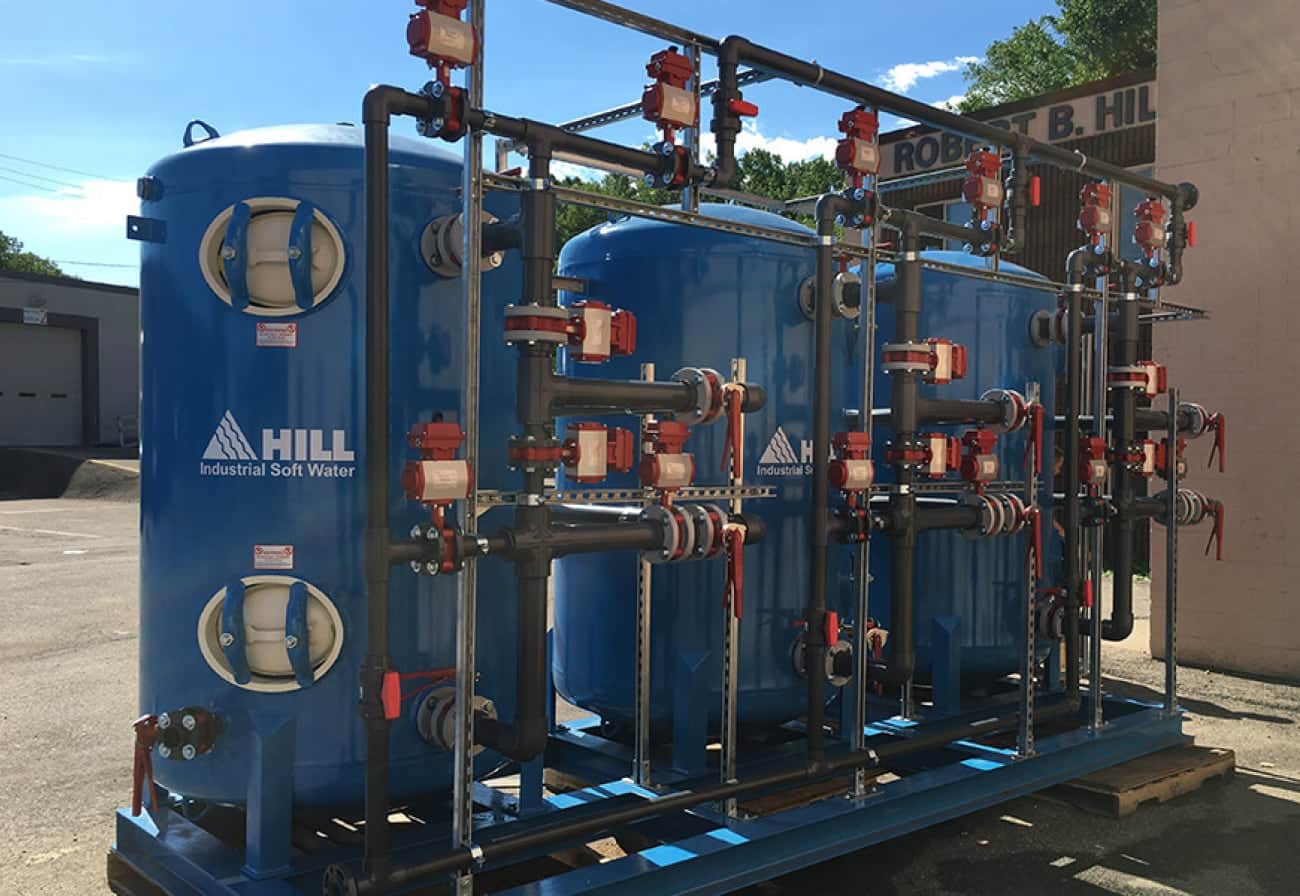
Robert B. Hill Co. will design and build a PFAS removal system tailored to your exact requirements.