
Reverse Osmosis Systems
What is Reverse Osmosis (RO) Water?
Reverse Osmosis water was invited by the US Navy to remove the sodium from ocean water in order to have drinkable water on submarines. That RO system has been refined and enhanced to the systems we have today that are available to commercial and residential customers.
Reverse Osmosis Systems remove TDS from water using pressure through a membrane that separates the water into the concentrate (reject water) and permeate (product water). The systems operate in a pressure range from 200 psi to 1200 psi depending on the application. The higher the TDS, the more pressure is required to overcome osmotic pressure.
Our engineers can design reverse osmosis systems for any application. Because we custom design our systems for each individual project, we are not limited by flow rate, size, or customer specific requirements. Most reverse osmosis systems fall into three main categories; traditional, brackish, or desalination/frac water.


Traditional RO System
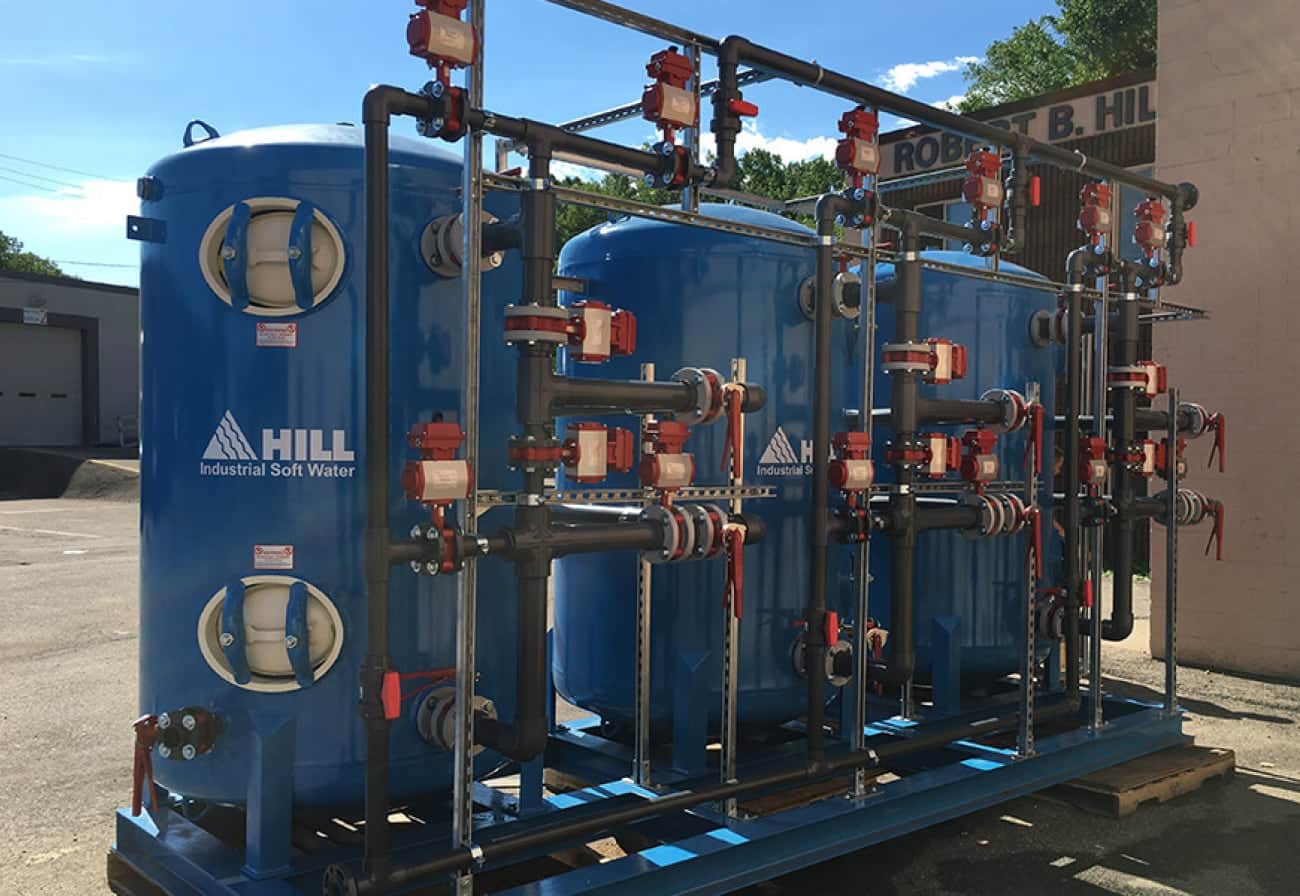
Traditional reverse osmosis systems operate with a feed of 200 psi to 400 psi. This means that a minimal amount of energy is used to pump the feed water through the membranes to overcome the osmotic pressure. The feed TDS levels are typically 100 ppm to 1,000 ppm. Traditional reverse osmosis systems have a configuration that includes a pre-filter, pvc header piping, plc controller, and fiberglass pressure vessels for the membrane housings. Options include stainless steel pressure vessels, stainless steel header piping, plc controller with remote monitoring, controller with touch panel display, design modifications for higher recovery rates, and other items depending on your application.
Industries That Benefit From Reverse Osmosis
Brackish RO Systems
Brackish reverse osmosis systems tend to operate over 400 psi and require more energy as a higher pressure pump is necessary. Brackish water has higher total dissolved solids than water that is fed through a traditional reverse osmosis system. The feed TDS levels are typically 1,000 ppm to 5,000 ppm. Brackish reverse osmosis systems have a configuration that includes a pre-filter, pvc header piping, plc controller, and fiberglass pressure vessels for the membrane housings. Options include stainless steel pressure vessels, stainless steel header piping, plc controller with remote monitoring, controller with touch panel display, design modifications for higher recovery rates, and other equipment depending on your application.
Desalination / Frac Water Treatment
Desalination reverse osmosis systems operate at 800 psi to 1200 psi. At 800 psi and above, a special high-pressure pump is required. These pumps not only produce high pressure but need to be made out of special alloys. Because of the increased amount of energy that is required to overcome the osmotic pressure, energy recovery devices are typically used. The feed TDS levels for desalination/frac reverse osmosis systems are typically 5,000 ppm to 40,000 ppm. Because of the high levels of TDS, the piping is made out of stainless steel or a variety of special alloys. Standard components are a plc controller with remote monitoring, touch panel display, and fiberglass pressure vessels.
Where Can I Buy Reverse Osmosis Water?
Robert B. Hill Co has been selling RO systems for decades. No matter what your application, we can install a reverse osmosis system for your company. Contact us today for pricing and availability.
Reverse Osmosis Filters and Membranes
Robert B. Hill Co sells RO filters, components, and membranes to our wholesale customers.
Commercial RO FAQs
What is commercial reverse osmosis (RO) water treatment?
Commercial reverse osmosis is a process that uses pressure to force water through a semipermeable membrane, removing dissolved solids, salts, and impurities. It produces purified water for industries such as food & beverage, healthcare, and manufacturing.
What’s the difference between traditional, brackish, and desalination RO systems?
Traditional RO: Operates at 200–400 psi, treating water with 100–1,000 ppm TDS.
Brackish RO: Operates above 400 psi for water with 1,000–5,000 ppm TDS.
Desalination/Frac RO: Operates at 800–1,200 psi for water with 5,000–40,000 ppm TDS
How much pressure is needed for a reverse osmosis system?
The required pressure depends on water quality. Traditional RO systems typically need 200–400 psi, while brackish systems require more than 400 psi, and desalination systems need 800–1,200 psi.
What contaminants does a reverse osmosis system remove?
RO systems are designed to reduce total dissolved solids (TDS), including salts, sodium, and other impurities. They are effective for applications requiring high-purity water.
Can RO systems be customized for my facility?
Yes. Hill engineers design custom RO solutions to meet specific flow rates, water quality, floor space, and industry needs that can be integrated into legacy equipment. Options include stainless steel vessels, PLC controllers with remote monitoring, and high-recovery design.
What are the maintenance requirements for a commercial RO system?
Typical maintenance includes replacing pre-filters, monitoring membranes, and checking pumps, piping, and controllers. The frequency depends on feed water quality and system size, but regular service maximizes lifespan and efficiency.
How do RO systems support sustainability and energy efficiency?
Modern commercial RO systems often use energy recovery devices (especially in desalination setups) to reduce operating costs and energy usage while providing reliable purified water.
More Water Treatment Services

Water Softener Systems
Reduce mineral buildup in equipment and pipelines, improve efficiency, extend equipment lifespan, and ensure consistent product quality.

Water Filtration Systems
Remove impurities and contaminants, enhance taste and clarity, protect equipment from damage, and maintain safe, high-quality water standards.

PFAS Removal
Remove harmful PFAS chemicals, safeguard consumer health, meet regulatory requirements, and ensure clean, reliable water quality.
Maintenance & Support
Protect your investment with expert guidance. We offer maintenance, salt delivery, and support in the Upper Midwest and beyond. Explore our services.
Ready to Get Started?
Robert B. Hill Co. will build a commercial reverse osmosis system tailored your exact requirements.